Taking nothing for granted – reflections from a missionary in Ecuador
Guest blog on Christian Medical Fellowship blog
Project Ecuador

Giving Hope and a Future
Thursday, 2 October 2014

Wednesday, 17 September 2014
An Ecuadorean Childhood...

Things I
love about my children´s childhood in rural Ecuador…
1. They spend hours playing with the
village children in the dirt, inventing games with no toys whatsoever (and certainly no phones or tablets). Imagination is alive and kicking.
2. If a child falls over, whoever
happens to be nearest picks them up, be they male or female, adult or child.
3. The whole community takes
responsibility for bringing up the children.
If a child is rude or badly behaved any adult will tell them so. Similarly if any child is upset or hurt someone
will immediately be taking care of them.
If a child is hungry someone will pass them something to eat.
4. People live in extended families
still. Grandparents, aunts, uncles and
cousins see each other regularly and help each other out at great personal
cost.
5. The children have space to run
around in, help look after the chickens and guinea pigs that will become their
meals, learn to swim in the nearest river, to climb in the nearest tree, and to
slide down the nearest pile of earth.
Sunday, 31 August 2014
6 events that have made me feel humble... and thankful...
- Throwing my old knickers in the bin, and then seeing them hung out to dry on the neighbour´s washing line.
- Being asked how many aeroplanes my 6 year old has flown in by someone who will never travel further than the local town their entire life.
- Being invited into a cane shack and fed chicken soup while the family looked on. I think I ate their supper.
- Having to wait until after dark to be able to go to the toilet, unseen, in the bushes, in a village where no one has a toilet.
- Asking a 20 year old Mum to sign her name… she, shamefaced, told me she could only give a finger print as she never went to school.
- Dressing the grotesque, stinking breast tumour of a 38 year old woman… she is the same age as me but does not have much longer to live.
Thursday, 21 August 2014
A Plastic Chair
I was
driving home one evening, tired out and desperate for a chance to have a shower
and then relax on the sofa with my feet up and a cup of tea. It was then that I spotted her. Señora Hilda is an old lady who lives in our
village. She is now well into her
seventies and suffers from a chronic illness that leaves her unable to get out
much. She was sitting inside her living
room with the front door open, watching the world go by. What caught my attention was the fact that she
was sitting bolt upright in a $10 plastic chair. There was no sofa in her bare living room. Her swollen ankles were hanging to the floor,
instead of being gently raised on a soft foot stool. There was not a comfortable cushion in
sight.
It made me
wonder what I expect to be doing when I finally reach old age and am frail and
want to rest my aching bones. I hope I
am not sat in a hard, plastic chair.
It is easy
to think that will never happen to me – after all, I am working hard and saving
for retirement. Surely I deserve
more.
But Señora
Hilda has worked hard all her life too.
She raised six children. She
still keeps chickens and pigs. She has
washed clothes by hand all her life and carried heavy sacks of bananas, corn and
manioc. She has carried buckets of water
from the well to cook and wash, and cooked every meal she has ever eaten from
scratch. No wonder she is now frail and
worn out. She does deserve a rest.
But despite
the hard chair she is happy. She is
surrounded by her children and grandchildren.
She lives near the friends she has had since she was a child herself. She enjoys watching them go by of an evening,
and calls out to greet them and hear their news. I don´t think she worries about her plastic
chair.
I hope when
I am old and frail I am surrounded by loved ones. Maybe what kind of chair I am sat upon is not
so important after all.

Thursday, 7 August 2014
Ethical Medicine?
I thought I
had seen it all… but apparently not.
I was
called to see an old lady at her home one evening at 9pm. All her family was gathered because they
thought she was dying. Her umpteen sons,
daughters and grandchildren crowded the tiny bedroom. They told me the patient had been fine the
day before, and that she had gradually become weaker and weaker until she could
no longer get out of bed. Now she was
nearly unconscious.
As I
enquired further, it transpired she had recently been started on a new
medication for her symptoms of mild depression.
The medication was a tranquilizer – one that was rapidly addictive. I told them the old lady´s symptoms were due
to overdose from the tranquilizer and advised them to stop giving it to her.
The family
stopped it temporarily, and the old lady recovered, but continued to feel
weepy, so one of her daughters took her back to the doctor who prescribed the
same tranquilizer in lower dose. The old
lady immediately calmed down and the family was delighted.
A few weeks
later, once the old lady was addicted to the tranquilizer, the doctor told the
family he would only continue to treat the patient if they paid him
$1,500. The tranquilizer is one of the
very few drugs you really cannot buy in Ecuador without a prescription. When the old lady stops taking it she
develops headache, starts to shake and becomes agitated and upset. The doctor has deliberately caused her to be
in the situation that to continue to receive the prescriptions for the medicine
she now craves, she has to pay him a huge sum of money.
Surely that
is not what being a psychiatrist is all about?

Wednesday, 23 July 2014
A Tragic Weekend
Victor is a friendly young man in his twenties, an identical twin in a united family and the father to two young girls. We often ride the same bus home late afternoon, and he smiles and chats to my daughters. Sadly, after Friday night he won´t be sharing a bus with us again anytime soon. He is fighting for his life in ITU.
After work he went to play football, had too much to drink, then attempted to ride home on a motorbike, with his teenage cousin, without a helmet. Minutes later, he was sprawled across the road, bleeding gravely with a severe head injury. It took half an hour for help to come, and he has been in Intensive Care in a coma ever since, with no signs of recovery so far.
His young wife is distraught, his 4 and 9 year old daughters are asking if they will ever see their father again. His family take turns to accompany him in the hospital, hoping and praying for a miracle.
That same night in our village a drunken brawl broke out between two friends. One man hit the other over the head repeatedly with a machete. His eye has been sliced in two and he too is in ITU in a coma in Quito. No one knows if he will live or die. The man who commited the crime has fled. Both these men are also fathers of young children in our village. In one foul swoop alcohol abuse has destroyed the lives of three families.
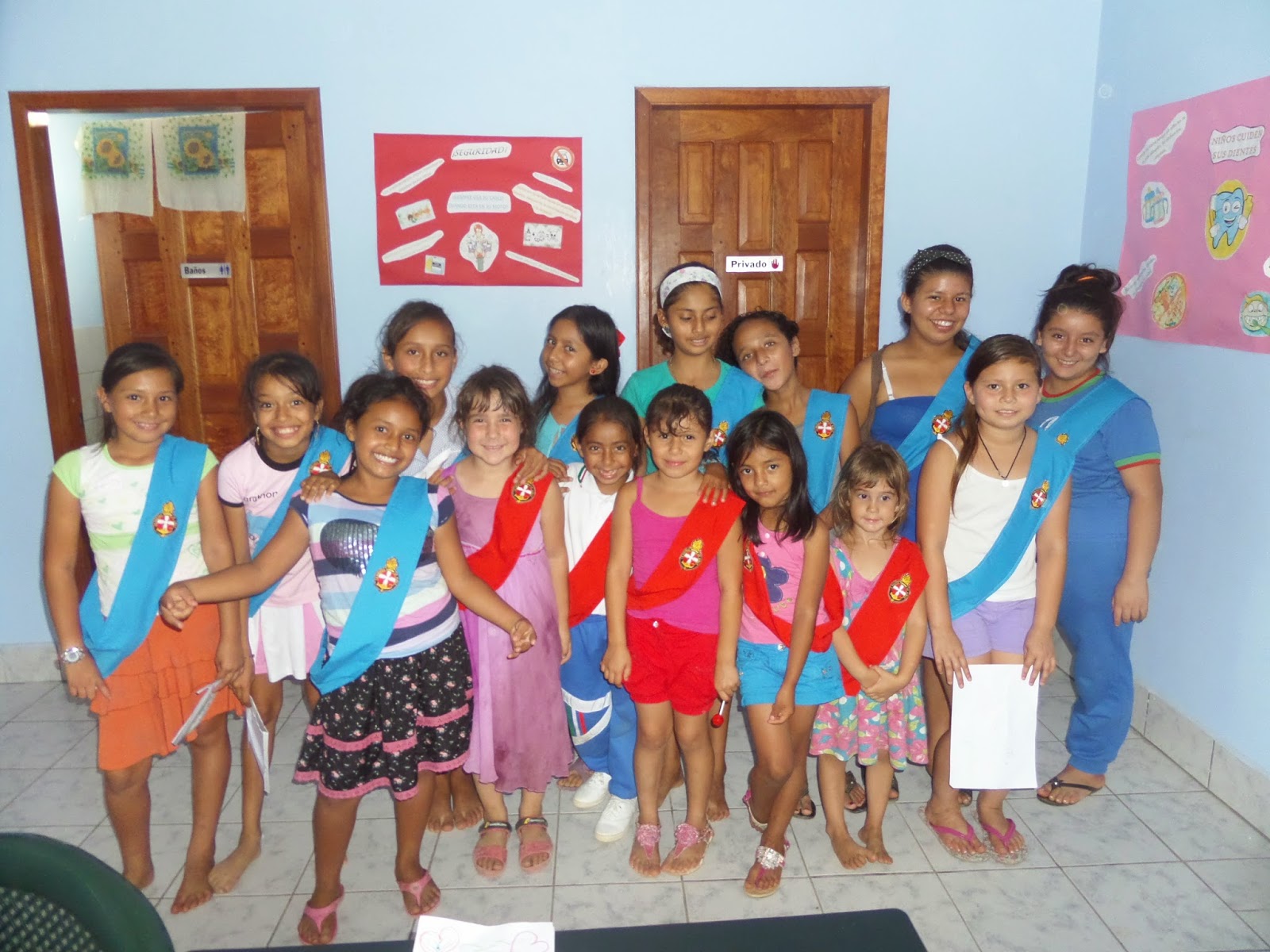
Daughters, nieces and sisters of these men were at our village Girls´ Brigade yesterday. We prayed to the redemptive God who offers hope and strength in dark times. Perhaps you will join me in praying for these young men, these families and our community.
After work he went to play football, had too much to drink, then attempted to ride home on a motorbike, with his teenage cousin, without a helmet. Minutes later, he was sprawled across the road, bleeding gravely with a severe head injury. It took half an hour for help to come, and he has been in Intensive Care in a coma ever since, with no signs of recovery so far.
His young wife is distraught, his 4 and 9 year old daughters are asking if they will ever see their father again. His family take turns to accompany him in the hospital, hoping and praying for a miracle.
That same night in our village a drunken brawl broke out between two friends. One man hit the other over the head repeatedly with a machete. His eye has been sliced in two and he too is in ITU in a coma in Quito. No one knows if he will live or die. The man who commited the crime has fled. Both these men are also fathers of young children in our village. In one foul swoop alcohol abuse has destroyed the lives of three families.
Daughters, nieces and sisters of these men were at our village Girls´ Brigade yesterday. We prayed to the redemptive God who offers hope and strength in dark times. Perhaps you will join me in praying for these young men, these families and our community.
Wednesday, 16 July 2014
A 15th Birthday in Ecuador
Here in Ecuador a girl´s 15th birthday is the special one. We recently had the privilege of attending the ceremony of a friend of ours, Johanna.
The event took place in her church. First the 14 flower girls and the boys partnering them processed down the aisle. The girls were in splendid white and pink dresses and the boys in black suits.

Next the birthday girl entered with her pink dress and companion turned out immaculately... They processed through the lines of escorts lining the aisle.

Once Johana was seated at the front of the church her father took off her flat shoes and put high heels on her feet. Johanna had come of age. She was now a woman. Her sister carried the Bible on a pink cushion. Her mother presented it to Johana as a valuable resource for her adult life ahead. Then her father gave a speech about the funny things Johanna had done as a child - like the time she put salt in the lemonade, instead of sugar, and took it to her father while he was working in the fields. Her mother followed with a speech about Johanna´s special qualities and ambition to study to be a nurse.
The ceremony complete, the women bustled to the kitchen to serve the food. Everyone received a plate of steaming rice and a slice of the huge pink cake.

The party continued with games and music, with much laughter and joy. Everyone was pleased to be celebrating the life of a special young lady, who was marking a new stage in her life.
Subscribe to:
Posts (Atom)