During our recent visit to the UK I was asked several questions repeatedly - so my next few blogs will be answers to these FAQs!
First up is, "Why did you give up the wealth and security you could have had as a doctor working in the UK, to work for a charity in Ecuador, with an unpredictable and far inferior income?"
To be honest this not something that often crosses my mind. Many of the things wealth could buy me are simply not attractive in comparison to the amazing life I am privileged to enjoy. I do not hanker after an expensive car, a big house or foreign travel. I find it grounds me to live beside people who struggle to feed their families each day. I do not compare myself with those who have more than me, but rather give thanks for the abundance I already have.
I have learnt to appreciate the benefits of a simpler lifestyle. I love the fact my daughters spend their time playing outside, not glued to screens. Our lives are full of reading wonderful books, creating beautiful crafts, and time spent as a family.
I consider my intelligence, education and opportunities to be God-given gifts. He did not give them to me to hoard up things for myself. He gave them to me to share with others. Living in rural Ecuador is my way of sharing the gifts God gave me with others less fortunate than myself. I find helping the sponsored children to gain an education they would not otherwise have, inspiring. I find great joy in running the girls´ club, and sharing the faith that gives me such love and peace with them.
I do sometimes question if I am limiting my daughters´ opportunities in life. It is easier to "give up" things for myself, than for them. Wouldn´t they be better off attending a private school in the UK as I did, rather than being homeschooled by their mother? All choices in life have their pluses and their minuses. However, I think the life my girls are living is enabling them to be happy, healthy and equipped to contribute to the world. I cherish the opportunity to be the one who is shaping their hearts and their minds.
I find that being out of my comfort zone, out of my culture and made to rely on God in a way I never would have done had I stayed and worked as a GP in the UK, has totally changed my perspective. It has enabled me to experience God´s loving care and provision in a tangible way. Living in a place where I often feel insecure and uncertain fixes my gaze on the One who is constant and unchanging. Living life filled with the love of God is a wonderful thing. I hope you too know His loving care wherever you are and whatever you do.
Project Ecuador

Giving Hope and a Future
Tuesday, 29 November 2016

Saturday, 1 October 2016
Encouragement
Encouragement and inspiration always build one up, so it was wonderful to receive both these gifts from Jenny the other day.
I first met Jenny when she was twelve years old. She had learnt to make jewellery at school, and brought me some to ask if I would be able to sell any of her creations for her through our project in the UK. She wanted to be able to go to secondary school, but her father did not believe it was worth educating girls, as she would likely end up a wife and mother, looking after her home as her mother did.
Jenny wanted to have a career, a means of supporting herself, a way out of poverty. I was impressed by her initiative and determination. I agreed to try selling her jewellery, sending packages of it to my mother in the UK for the Project Ecuador stalls.
It sold well, and Jenny faithfully brought me batches of new designs every fortnight the whole six years she attended secondary school. Her beautiful earrings, bracelets and necklaces generated enough income for her to pay for her uniform, shoes, stationary, books and bus fares, and helped her self-confidence to grow.
Now, aged twenty, Jenny has a full time job as a book-keeper, and is studying accountancy at university in the evenings and at weekends.
Jenny asked me if she could come and teach jewellery-making to the girls in the club I run. She wanted to share the skills that had so helped her when she was their age. It was a real encouragement for me to have her help and speak to the girls.

Jenny encouraged the other girls not to give up on their studies. She told them about her faith in Jesus, which has helped her to keep her eyes focused on her goals in life, when other glittering temptations have sought to derail her.
Jenny is a warm, humble, confident, quietly-spoken young woman now. She desires to have a degree, a respectable job and one day a Christian family of her own. May the God she so faithfully serves grant her her heart´s desires.
I first met Jenny when she was twelve years old. She had learnt to make jewellery at school, and brought me some to ask if I would be able to sell any of her creations for her through our project in the UK. She wanted to be able to go to secondary school, but her father did not believe it was worth educating girls, as she would likely end up a wife and mother, looking after her home as her mother did.
Jenny wanted to have a career, a means of supporting herself, a way out of poverty. I was impressed by her initiative and determination. I agreed to try selling her jewellery, sending packages of it to my mother in the UK for the Project Ecuador stalls.
It sold well, and Jenny faithfully brought me batches of new designs every fortnight the whole six years she attended secondary school. Her beautiful earrings, bracelets and necklaces generated enough income for her to pay for her uniform, shoes, stationary, books and bus fares, and helped her self-confidence to grow.
Now, aged twenty, Jenny has a full time job as a book-keeper, and is studying accountancy at university in the evenings and at weekends.
Jenny asked me if she could come and teach jewellery-making to the girls in the club I run. She wanted to share the skills that had so helped her when she was their age. It was a real encouragement for me to have her help and speak to the girls.
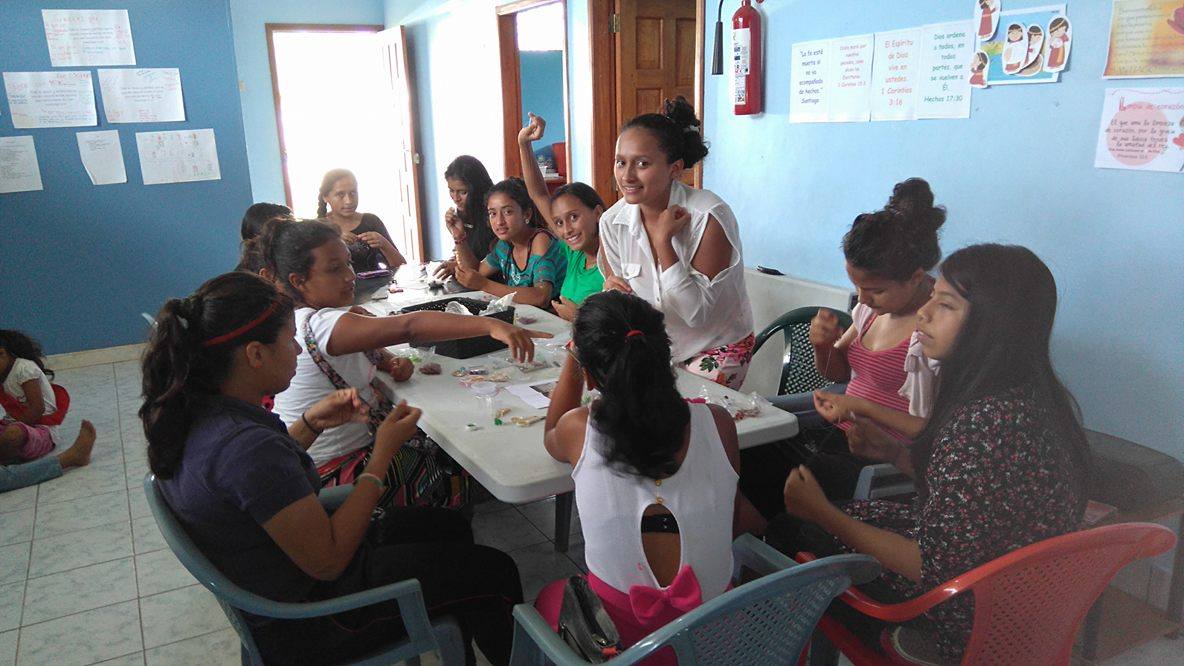
Jenny encouraged the other girls not to give up on their studies. She told them about her faith in Jesus, which has helped her to keep her eyes focused on her goals in life, when other glittering temptations have sought to derail her.
Jenny is a warm, humble, confident, quietly-spoken young woman now. She desires to have a degree, a respectable job and one day a Christian family of her own. May the God she so faithfully serves grant her her heart´s desires.
Friday, 23 September 2016
When Home is a Foreign Country
A guest blog post on http://www.amyboucherpye.com today...
When I left Britain eleven years ago for the bustling equatorial city
of Santo Domingo, Ecuador, I never expected to call it home. I was
going as a missionary doctor, to serve for an undefined period.
Everything I encountered was different, other and strange. I constantly
felt plastered in sweat and dust. The barbecued tripe, cow’s udder and
maggots that people offered me to eat did not appeal. Whilst I admired
the beauty of the tropical flowers and humming birds, they did not
conjure up the feeling of home that wind-swept heather and the humble
robin did.
Each morning, I ventured forth to a world where I had to make myself understood in Spanish, fight off the mosquitoes and ride the over-filled bus with chickens pecking my feet. Each evening, I returned to my rented home where English DVDs, toast and tea could be enjoyed.
Three years later, I was married to an Ecuadorean with a beautiful baby girl. Now, Ecuadorean culture invaded my home. My husband expected rice three times a day. Spanish was the predominant language spoken. My in-laws were free with their help and advice.
“Don’t sit the baby up, she will end up with saggy cheeks! Cover your shoulders when you nurse her, or your milk will be cold. Keep a hat on her at all times or evil spirits will enter her through the soft spot on her head.”
My own toddler woke me one morning waving a leg of guinea pig in my face. It was left over from the previous night’s meal. “Want meat Mummy,” she cried. For her, eating guinea pig was completely normal. I wondered what on earth I was doing bringing up my daughter in this strange place. I felt a sudden yearning to go home to “normality”. Tea and toast seemed a distant dream.
There followed a steep learning curve of not only knowing the local customs, beliefs and ideas, but also understanding their values and priorities. At first, it drove me mad when people told me that they would be at an appointment at a certain time, and then were late or did not show at all. It was frustrating when my husband set out to do a, b and c in a day and only did a, leaving the rest for tomorrow. Gradually, I came to realise Ecuadoreans value people and relationships above work and money. If they meet someone who wants to chat, they will, disregarding prior plans. You will always be welcomed into an Ecuadoreans’ home when you turn up unannounced. A family shares the food they have cooked among the number of people who happen to be there at a mealtime. If a friend has a crisis, everything else can be set aside in order to help them.
I found I had to embrace living as part of an extended family. In a society where there is no social security or insurance, families rely on each other. When my car breaks down, I phone my father-in-law, not the breakdown services. Grandparents, aunts, uncles and cousins live close by and are a daily part of each other’s lives. Individualism is frowned upon. Adult children take their parents into their homes when they are elderly and nurse them.
It was only as I came to appreciate the culture of my adopted country that I began to feel at home. Life became more familiar and predicable. It stopped shocking and jarring me at every turn. Life in Britain remains more intuitive, but there are now aspects of British culture that I find hard.
Living in Ecuador has taught me to appreciate the positives in a different society. Our God is a God of variety and creativity and each family has their own way of expressing themselves and making a home. The experience is stripping away my illusion that my way of doing things is the best way, and is making me more of a world citizen. It is making me look forward to the day when our home will be with God and with His people from every tribe and nation, living in perfect harmony and love.
Andrea Gardiner is a medical missionary in Ecuador. She tells her adventures in Guinea Pig For Breakfast. She works for Project Ecuador www.projectecuador.co.uk.
Each morning, I ventured forth to a world where I had to make myself understood in Spanish, fight off the mosquitoes and ride the over-filled bus with chickens pecking my feet. Each evening, I returned to my rented home where English DVDs, toast and tea could be enjoyed.
Three years later, I was married to an Ecuadorean with a beautiful baby girl. Now, Ecuadorean culture invaded my home. My husband expected rice three times a day. Spanish was the predominant language spoken. My in-laws were free with their help and advice.
“Don’t sit the baby up, she will end up with saggy cheeks! Cover your shoulders when you nurse her, or your milk will be cold. Keep a hat on her at all times or evil spirits will enter her through the soft spot on her head.”
My own toddler woke me one morning waving a leg of guinea pig in my face. It was left over from the previous night’s meal. “Want meat Mummy,” she cried. For her, eating guinea pig was completely normal. I wondered what on earth I was doing bringing up my daughter in this strange place. I felt a sudden yearning to go home to “normality”. Tea and toast seemed a distant dream.
There followed a steep learning curve of not only knowing the local customs, beliefs and ideas, but also understanding their values and priorities. At first, it drove me mad when people told me that they would be at an appointment at a certain time, and then were late or did not show at all. It was frustrating when my husband set out to do a, b and c in a day and only did a, leaving the rest for tomorrow. Gradually, I came to realise Ecuadoreans value people and relationships above work and money. If they meet someone who wants to chat, they will, disregarding prior plans. You will always be welcomed into an Ecuadoreans’ home when you turn up unannounced. A family shares the food they have cooked among the number of people who happen to be there at a mealtime. If a friend has a crisis, everything else can be set aside in order to help them.
I found I had to embrace living as part of an extended family. In a society where there is no social security or insurance, families rely on each other. When my car breaks down, I phone my father-in-law, not the breakdown services. Grandparents, aunts, uncles and cousins live close by and are a daily part of each other’s lives. Individualism is frowned upon. Adult children take their parents into their homes when they are elderly and nurse them.
It was only as I came to appreciate the culture of my adopted country that I began to feel at home. Life became more familiar and predicable. It stopped shocking and jarring me at every turn. Life in Britain remains more intuitive, but there are now aspects of British culture that I find hard.
Living in Ecuador has taught me to appreciate the positives in a different society. Our God is a God of variety and creativity and each family has their own way of expressing themselves and making a home. The experience is stripping away my illusion that my way of doing things is the best way, and is making me more of a world citizen. It is making me look forward to the day when our home will be with God and with His people from every tribe and nation, living in perfect harmony and love.
Andrea Gardiner is a medical missionary in Ecuador. She tells her adventures in Guinea Pig For Breakfast. She works for Project Ecuador www.projectecuador.co.uk.
Tuesday, 23 August 2016
Back to School
It is the time of year when many children are going back to school. New shoes are shining, larger uniforms are freshly ironed and sparkling school bags are filled with colourful pens and pencils. Schools are waiting with libraries to be explored, laboratories ready to be experimented in and sports fields ready for action.
The rural schools here are filled with bright smiles and mischievous looks, but the children´s shoes are old and tight. Some children have nothing to write with and no books to write in. Others simply stay at home as their parents cannot afford the back to school expense. This year there are children newly arrived in the area as their rented homes were destroyed by the earthquake. Their parents are now caretakers on local farms, working in exchange for a roof over their heads. These people lost the little they had and have no skills with which to better themselves.
Each year we are pleased to be able to buy individual children school supplies and uniform through the support of their sponsors. The teachers in the local schools never cease to thank me for the help these children receive and are always asking if there are more sponsors available for more needy children.

 We are also delighted to be able to support the schools with books and resources. These schools do not have a library. The only books the children have are the set textbooks. They also lack computers. Where can the children hear stories, have their imaginations fired and investigate the topics that interest them?
We have been able to give each of the 6 village schools in our area a selection of books this year for the children to enjoy. These have included non-fiction, story books and Christian books.
The nursery teacher in the nearest school was delighted to have new stories to read to her little ones. The older classes take it in turns to sit outside in a circle to read a book of their choice. Some of the older children read to the younger ones. It is wonderful to see the children enjoying the books.
We were also able to help the Carchense nursery class with some toys for imaginative play. The teacher had a room full of 3 to 5 year olds to teach for 4 hours a day, and hardly any resources to do it with. These children come from very poor homes. They may have one or 2 toys at home, but no more. They lack stimulation and need to develop their motor skills and imaginations.
Their smiles say more than my words could to show their appreciation.


The children in one school also hugely benefitted from a Scottish volunteer teaching English for a couple of months. She also gave music lessons to children in a neighbouring village. These opportunities are never usually in the reach of these children. They will never forget the experience and the self-confidence that was built.

The rural schools here are filled with bright smiles and mischievous looks, but the children´s shoes are old and tight. Some children have nothing to write with and no books to write in. Others simply stay at home as their parents cannot afford the back to school expense. This year there are children newly arrived in the area as their rented homes were destroyed by the earthquake. Their parents are now caretakers on local farms, working in exchange for a roof over their heads. These people lost the little they had and have no skills with which to better themselves.
Each year we are pleased to be able to buy individual children school supplies and uniform through the support of their sponsors. The teachers in the local schools never cease to thank me for the help these children receive and are always asking if there are more sponsors available for more needy children.

 We are also delighted to be able to support the schools with books and resources. These schools do not have a library. The only books the children have are the set textbooks. They also lack computers. Where can the children hear stories, have their imaginations fired and investigate the topics that interest them?
We have been able to give each of the 6 village schools in our area a selection of books this year for the children to enjoy. These have included non-fiction, story books and Christian books.
The nursery teacher in the nearest school was delighted to have new stories to read to her little ones. The older classes take it in turns to sit outside in a circle to read a book of their choice. Some of the older children read to the younger ones. It is wonderful to see the children enjoying the books.
We were also able to help the Carchense nursery class with some toys for imaginative play. The teacher had a room full of 3 to 5 year olds to teach for 4 hours a day, and hardly any resources to do it with. These children come from very poor homes. They may have one or 2 toys at home, but no more. They lack stimulation and need to develop their motor skills and imaginations.
Their smiles say more than my words could to show their appreciation.


The children in one school also hugely benefitted from a Scottish volunteer teaching English for a couple of months. She also gave music lessons to children in a neighbouring village. These opportunities are never usually in the reach of these children. They will never forget the experience and the self-confidence that was built.

A big thank you to all the sponsors, volunteers and donors who make this possible.
Friday, 12 August 2016
Life after an earthquake
Life after an earthquake is a little boy running out of the house like an arrow shot from a bow, every time the wind rattles the windows. It is a young girl crying when she remembers the dead children she witnessed, wrapped only in sheets, lying out on the hillside lit by flickering candles.
Life after an earthquake is a teenage girl sobbing and screaming in terror as an aftershock hits some weeks later.
Life after an earthquake is a grown woman seeing the lamp wobble above her on the dentist´s chair, trying to get up and out of there.
Life after an earthquake is a 94 year old lady literally shaking in her bare feet and collapsing cane hut for days on end after another aftershock asaults her shattered nerves.

Life after an earthquake is grief, orphans, loss, survival.
Life after an earthquake is an inertia of the soul, a closing down, a huddling inside oneself in search of safety. It is a feeling of everything else somehow being on hold, despite the hive of activity on the surface. It is treading water until you can start to believe life is going to carry on.
Life after an earthquake is families living under plastic, exposed to the mosquitoes, without a toilet, running water or electricity. It is delivering food parcels to these families left without jobs. It is giving them clothes to cover themselves and toys to brighten their day.
 Life after an earthquake is building and repairing. It is knocking down and clearing rubble, leaving once crowded areas bare. Slowly the sounds of sweeping cease, the dust settles and blocks begin to be placed upon blocks once again.

Life after an earthquake is a sense that solid ground is no longer firm. The future is not predicable. The foundations of life have shifted sending out ripples into every area of life.
And yet life after an earthquake continues, as it did before, resting in the loving arms of the Saviour who is the same yesterday, today and forever. He is the solid rock on whom we can rely and rebuild our lives. He is our hope for eternity.
Life after an earthquake is a teenage girl sobbing and screaming in terror as an aftershock hits some weeks later.
Life after an earthquake is a grown woman seeing the lamp wobble above her on the dentist´s chair, trying to get up and out of there.
Life after an earthquake is a 94 year old lady literally shaking in her bare feet and collapsing cane hut for days on end after another aftershock asaults her shattered nerves.

Life after an earthquake is grief, orphans, loss, survival.
Life after an earthquake is an inertia of the soul, a closing down, a huddling inside oneself in search of safety. It is a feeling of everything else somehow being on hold, despite the hive of activity on the surface. It is treading water until you can start to believe life is going to carry on.
Life after an earthquake is families living under plastic, exposed to the mosquitoes, without a toilet, running water or electricity. It is delivering food parcels to these families left without jobs. It is giving them clothes to cover themselves and toys to brighten their day.


Life after an earthquake is a sense that solid ground is no longer firm. The future is not predicable. The foundations of life have shifted sending out ripples into every area of life.
And yet life after an earthquake continues, as it did before, resting in the loving arms of the Saviour who is the same yesterday, today and forever. He is the solid rock on whom we can rely and rebuild our lives. He is our hope for eternity.
Wednesday, 27 April 2016
God is with us
Our hearts are heavy at the images of destruction and the stories of death that people have to tell everywhere we go at the moment. Yet the generous flood of aid and donations keeps hope alive. We mourn with those who mourn. We also know that "God is with us" - words spoken by 4 year old Matias, while trapped under the rubble.
The Ecuadorian Christians are sharing this message of hope, while they distribute food and water. When Jesus was asked if people suffered disasters because of their sin, (Luke 13), he replied that those who suffered were no worse sinners than anyone else, but that all needed to repent. The Christians here are telling those they help that they were spared because the God of love is calling them. He does not want them to perish.
In our church this Sunday there was a woman who became a Christian following the earthquake, and who has now asked for baptism. I am sure there are many others who have done the same.
For many, the natural reaction to witnessing an early death is the desire to make every second count, to seize the day. "Life is short," we say. This is true and admirable, but it is also true that eternity is long.Living each day as if it were my last makes me focus on myself and my own desires. Contemplating the reality of eternity lifts my sights to things above and to eternal values. It calls me to live each day for the God of love, to love and serve others. It pushes me to invest in my relationship with God and my relationships with my family and frends. It is these relationships that are eternal.
On Sunday the preacher exhorted us to see the blessing that comes through suffering. He said, "suffering causes us to listen to God and means that we see Him at work." When all is well, it is so easy to take everything for granted and to forget our dependence on God. Times of suffering can draw us much closer to Him.
One day these disasters will be no more. Sometimes we wish that time would come faster. But God wants more of us to come into His family first, and so He waits still.
May that hope of eternity keep us serving, praying and loving, no matter what befalls us.
The Ecuadorian Christians are sharing this message of hope, while they distribute food and water. When Jesus was asked if people suffered disasters because of their sin, (Luke 13), he replied that those who suffered were no worse sinners than anyone else, but that all needed to repent. The Christians here are telling those they help that they were spared because the God of love is calling them. He does not want them to perish.
In our church this Sunday there was a woman who became a Christian following the earthquake, and who has now asked for baptism. I am sure there are many others who have done the same.
For many, the natural reaction to witnessing an early death is the desire to make every second count, to seize the day. "Life is short," we say. This is true and admirable, but it is also true that eternity is long.Living each day as if it were my last makes me focus on myself and my own desires. Contemplating the reality of eternity lifts my sights to things above and to eternal values. It calls me to live each day for the God of love, to love and serve others. It pushes me to invest in my relationship with God and my relationships with my family and frends. It is these relationships that are eternal.
On Sunday the preacher exhorted us to see the blessing that comes through suffering. He said, "suffering causes us to listen to God and means that we see Him at work." When all is well, it is so easy to take everything for granted and to forget our dependence on God. Times of suffering can draw us much closer to Him.
One day these disasters will be no more. Sometimes we wish that time would come faster. But God wants more of us to come into His family first, and so He waits still.
May that hope of eternity keep us serving, praying and loving, no matter what befalls us.
Monday, 18 April 2016
Earthquake Experiences
When Gabi, her husband and her family set off for a weekend at the beach, they had no idea what lay in store. Lesly, her 12 year old daughter, and Matias, her 4 year old son, were very excited about the trip, as they had never been away for more than a day trip before. The school holidays were drawing to a close, and they were keen to have a little holiday before classes started again.
They arrived at the beach on Saturday morning, found a hotel, and set off for the sea. They loved swimming and playing in the sand. As dusk approached, they headed to their hotel room to get showered. They were all naked when the earthquake hit. In an instant the roof collapsed on top of the four of them. Gabi managed to throw herself on top of her son, but she could not hear anything. She screamed for Matias or Lesly to answer her, but she could hear no reply. Finally she heard a whisper from her four year old, "Don´t scream Mummy, God is with us." Then she heard Lesly calling out that she was under a pile of blocks. She was so thankful to know they were both alive.
Gabi´s mother, sisters and cousins managed to get out of the hotel. They came to find their relatives and struggled to pull them out from the rubble by hand. Gabi was the last to be pulled out into the open. They were hysterical, but not seriously injured. They made their way up on to a hill, along with many other people, to wait out the night. They said it was pitch black and none of them slept. It was the longest night of their lives. Across the hill they could see a family setting up a makeshift wake for a relative.
They said they saw just one fireman in the town, trying to help the more seriously injured. Many were crying for help, and everyone was just searching for the members of their families. There were also thieves already looting, stealing from the abandoned stalls by the seafront.
At daybreak, they set off to try to find a way home. They tried many different roads away from the coast, only to find they were impassable. Everywhere they went, they saw houses fallen to the ground, and people sleeping outside under mosquito nets. Eventually, 20 hours later (a journey that usually takes 4 hours), they reached home. There were long queues in the petrol stations and they ate nothing all day. They arrived at 1am.
They are pale and bruised, but remarkably unscathed. So many others were not so fortunate. Aid is reaching the main towns, but not yet the smaller villages. Police and military are having to escort aid trucks, as thieves have attacked some en route.
Project Ecuador will buy food, water, repellent etc. to send to the victims with any donations we receive for the earthquake victims, and take them to the offical collection points.
http://uk.virginmoneygiving.com/charity-web/charity/finalCharityHomepage.action?charityId=1002812
Please pray for those who are taking part in the rescue effort, and for those who have been left without loved ones and homes.

They arrived at the beach on Saturday morning, found a hotel, and set off for the sea. They loved swimming and playing in the sand. As dusk approached, they headed to their hotel room to get showered. They were all naked when the earthquake hit. In an instant the roof collapsed on top of the four of them. Gabi managed to throw herself on top of her son, but she could not hear anything. She screamed for Matias or Lesly to answer her, but she could hear no reply. Finally she heard a whisper from her four year old, "Don´t scream Mummy, God is with us." Then she heard Lesly calling out that she was under a pile of blocks. She was so thankful to know they were both alive.
Gabi´s mother, sisters and cousins managed to get out of the hotel. They came to find their relatives and struggled to pull them out from the rubble by hand. Gabi was the last to be pulled out into the open. They were hysterical, but not seriously injured. They made their way up on to a hill, along with many other people, to wait out the night. They said it was pitch black and none of them slept. It was the longest night of their lives. Across the hill they could see a family setting up a makeshift wake for a relative.
They said they saw just one fireman in the town, trying to help the more seriously injured. Many were crying for help, and everyone was just searching for the members of their families. There were also thieves already looting, stealing from the abandoned stalls by the seafront.
At daybreak, they set off to try to find a way home. They tried many different roads away from the coast, only to find they were impassable. Everywhere they went, they saw houses fallen to the ground, and people sleeping outside under mosquito nets. Eventually, 20 hours later (a journey that usually takes 4 hours), they reached home. There were long queues in the petrol stations and they ate nothing all day. They arrived at 1am.
They are pale and bruised, but remarkably unscathed. So many others were not so fortunate. Aid is reaching the main towns, but not yet the smaller villages. Police and military are having to escort aid trucks, as thieves have attacked some en route.
Project Ecuador will buy food, water, repellent etc. to send to the victims with any donations we receive for the earthquake victims, and take them to the offical collection points.
http://uk.virginmoneygiving.com/charity-web/charity/finalCharityHomepage.action?charityId=1002812
Please pray for those who are taking part in the rescue effort, and for those who have been left without loved ones and homes.

Subscribe to:
Posts (Atom)